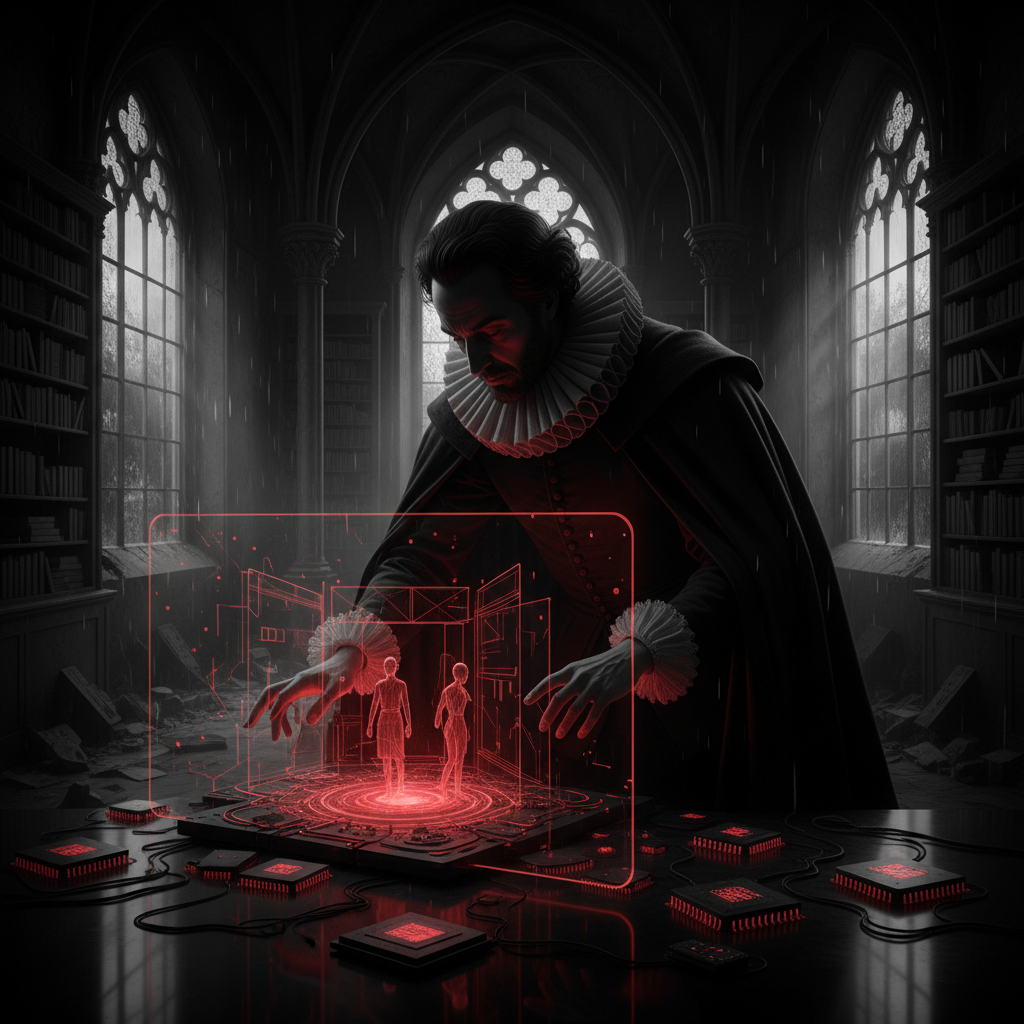
Discover how AI brought Molière back to life with a new play in 2026. See how this blend of tech and tradition is changing the way we think about creativity and authorship.
What happens when a 17th-century playwright gets a 21st-century upgrade? The answer might surprise you. French theater lovers and tech enthusiasts alike are buzzing about a groundbreaking project where artificial intelligence was used to create a "new" work by Molière, the beloved French playwright. It's a fascinating blend of history and cutting-edge tech that raises big questions about creativity, authorship, and what it means to be an artist.
### The Story Behind the AI Molière
Imagine feeding thousands of pages of Molière's classic plays into a machine learning model. That's exactly what a team of researchers and theater experts did. They trained an AI on his signature style—the sharp wit, the biting satire, the rhythmic dialogue that defined French comedy. The result? A brand-new scene that feels like it could have been written by the master himself.
But let's be real: this wasn't just a computer spitting out words. The project involved human scholars who guided the AI, making sure it stayed true to Molière's voice. They'd tweak the output, refine the language, and ensure the humor landed. It's a collaboration, not a replacement.
### How Does It Actually Work?
If you're wondering about the tech behind this, here's a simple breakdown:
- **Data collection**: The team compiled a massive dataset of Molière's works, including his most famous plays like *Tartuffe* and *The Misanthrope*.
- **Training**: They used a generative AI model, similar to the ones powering chatbots, but fine-tuned it specifically on Molière's language patterns.
- **Human input**: Theater experts reviewed the AI's drafts, making edits to preserve dramatic flow and historical accuracy.
- **Final product**: The AI-generated scene was performed live by actors, blending old-school theater with modern AI.
This isn't just a gimmick. It's a serious exploration of how AI can help us reconnect with cultural heritage. Think of it like a digital time machine that lets us hear a lost voice from the past.
### Why This Matters for 2026
As we look ahead to 2026, this project is a perfect example of where AI is heading. It's not about replacing human creativity—it's about augmenting it. In the United States, professionals in fields like marketing, content creation, and even law are already using AI tools to brainstorm ideas, draft documents, and analyze data. But projects like the Molière AI show us something deeper: AI can help us preserve and even revive our cultural treasures.
### What This Means for You
If you're a professional working with AI tools, here's the takeaway: the best AI isn't the one that does everything for you. It's the one that works with you. Just like the Molière project needed human scholars to guide the AI, your work will always benefit from your own expertise and intuition.
So, whether you're using AI to write marketing copy, generate code, or analyze customer feedback, remember that you're the director. The AI is just your tool. And when you combine human creativity with machine efficiency, the results can be truly extraordinary.
### The Bigger Picture
This experiment also sparks a conversation about authorship. If an AI writes a play based on Molière's style, who owns it? The programmers? The scholars? The AI itself? These are questions we'll be wrestling with for years to come. But for now, it's exciting to see how technology can breathe new life into old art.
In the end, the Molière AI project is a reminder that innovation doesn't have to abandon tradition. Sometimes, the most forward-thinking ideas come from looking back. And if a 400-year-old playwright can get a digital makeover, imagine what else is possible.
*This article was inspired by a recent project featured in The Guardian, where AI was used to generate a new work by Molière. The original article sparked conversations about the intersection of technology and art.*