Arm AGI CPU: The Foundation for Agentic AI Cloud Computing
Carmen López ·
Listen to this article~4 min
Arm's new AGI CPU is designed as the hardware foundation for the coming era of autonomous, agentic AI in the cloud, focusing on efficiency and scalability for persistent intelligent systems.
So, you've been hearing all this buzz about agentic AI and the cloud era, right? It feels like every tech conversation these days eventually circles back to it. Well, Arm just dropped some major news that's going to shape that entire conversation moving forward. They've announced their AGI CPU, and they're calling it the silicon foundation for this new age of intelligent, autonomous systems in the cloud.
Let's break that down a bit. What does 'silicon foundation' even mean? Think of it like this: you're building a skyscraper. You can have the most beautiful glass and steel design, but if the concrete and rebar foundation isn't rock solid, the whole thing comes tumbling down. That's what Arm is positioning itself as—the essential, underlying hardware that makes the flashy AI agent future possible and, more importantly, reliable.
### What Makes This CPU Different?
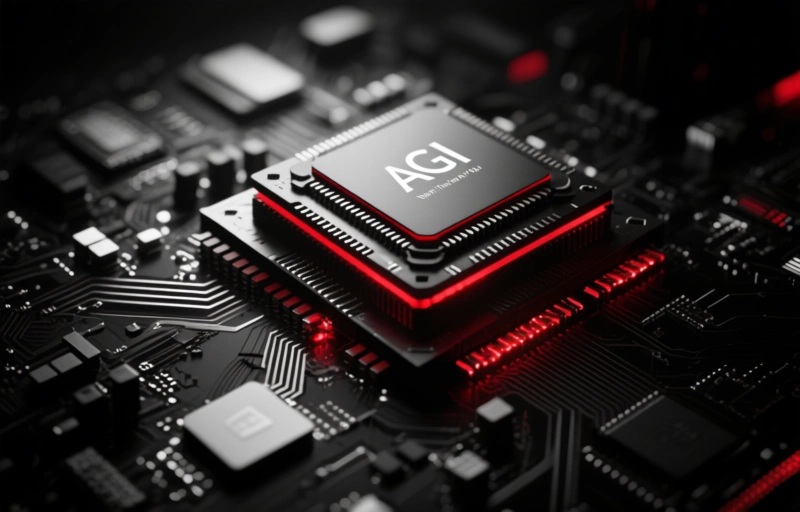
This isn't just another processor speed bump. The AGI CPU is designed from the ground up for a specific type of workload. We're talking about AI agents—systems that don't just follow a script, but can perceive, plan, and act with a degree of autonomy. That requires a different kind of computational muscle. It's less about raw, brute-force number crunching and more about efficient, continuous reasoning. Arm's design focuses on the low-power, high-efficiency architecture they're known for, but scaled and optimized for these complex, persistent AI tasks that will live in the cloud.
### Why the Cloud Era Needs a New Foundation
The shift to agentic AI changes everything. Instead of running a single model for a specific task, cloud infrastructure will need to host and orchestrate countless intelligent agents simultaneously. These agents will be interacting, learning, and making decisions 24/7. The old way of doing things, with power-hungry chips that generate massive amounts of heat, just won't scale. Efficiency becomes the name of the game. Data centers are already pushing against physical limits in terms of power draw and cooling. A new foundation that delivers more intelligence per watt isn't just nice to have—it's an absolute necessity for this future to become a reality.
Here’s what this shift could enable:
- **Persistent Personal Assistants:** Imagine an AI that truly understands your work context, remembers past conversations, and proactively helps across all your apps.
- **Autonomous Business Processes:** Entire workflows—from supply chain logistics to customer service—managed by collaborative AI agents.
- **Next-Gen Scientific Research:** AI agents that can run continuous simulations, analyze data, and propose new hypotheses without constant human oversight.
The potential is staggering, but it all hinges on having hardware that can support it sustainably.
As one industry observer noted, *'The bottleneck for agentic AI won't be the algorithms, but the silicon they run on.'* Arm is aiming directly at that bottleneck.
### What This Means for Professionals
If you're working with AI, cloud infrastructure, or any tech-adjacent field, this is a signal you should pay attention to. The hardware layer is evolving to meet the demands of the software layer. When the foundation changes, everything built on top of it changes too. It suggests a future where running sophisticated AI becomes more accessible and cost-effective, potentially lowering the barrier to entry for developing powerful agentic systems. It also underscores a major industry trend: the convergence of chip design and AI roadmap planning. They're no longer separate conversations.
So, while the announcement is about a specific CPU, the real story is about the trajectory of the entire industry. Arm isn't just selling a chip; they're laying claim to being the essential platform for the next decade of AI innovation. The race to build the future isn't just about who has the best model—it's increasingly about who has the best, most efficient foundation to run it all on. And with this move, Arm has made a very compelling case for their role in that future.