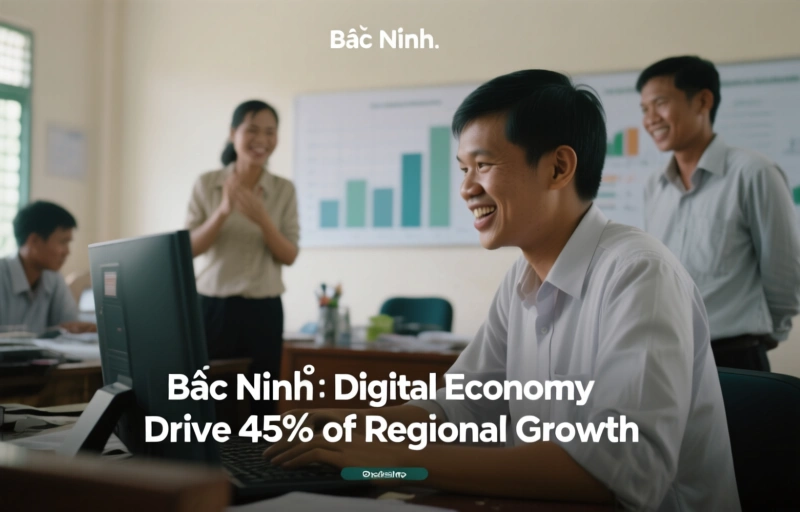
Bắc Ninh Province targets a digital economy contributing 45% to its GRDP, signaling a major shift towards tech-driven growth and a blueprint for regional economic transformation.
You know, sometimes a single statistic can tell you everything you need to know about where things are headed. That's exactly what's happening in Bắc Ninh Province, Vietnam. We're looking at a future where the digital economy isn't just a part of the picture—it's becoming the main engine. Recent projections indicate it's poised to contribute a staggering 45% to the province's Gross Regional Domestic Product (GRDP). That's not just growth; that's a fundamental transformation.
Let that sink in for a moment. Nearly half of all economic activity in this key northern region could soon be digital. It's a clear signal that the old ways of doing business are giving way to something faster, more connected, and frankly, more resilient. This shift isn't happening by accident. It's the result of deliberate strategy and a recognition that the future of work and commerce is being written in code and data.
### What This Transformation Really Means
So, what does a 45% digital contribution actually look like on the ground? It's more than just e-commerce or a few tech startups. We're talking about a complete rewiring of the local economy. Traditional manufacturing hubs are integrating smart technologies. Supply chains are becoming transparent and efficient through digital platforms. Even agriculture and local services are finding new markets and operational models online.
This level of integration suggests a province that's not just adopting technology, but building its entire economic identity around it. The goal is clear: to create an ecosystem where digital innovation fuels prosperity across all sectors. It's a bold move, and if successful, it could serve as a powerful blueprint for other regions.
### The Building Blocks of a Digital Future
Achieving this target requires more than just wishful thinking. It needs foundational pillars. Based on global trends, we can infer a few critical areas of focus:
- **Digital Infrastructure:** This is the bedrock. We're talking about widespread, affordable high-speed internet, robust data centers, and seamless connectivity. You can't have a digital economy if people and businesses can't get online reliably.
- **Skilled Workforce:** Technology is only as good as the people using it. This means a major push in STEM education, digital literacy programs, and upskilling initiatives to prepare the current workforce for new kinds of jobs.
- **Supportive Policy Framework:** Governments need to create the rules of the road. This includes everything from data protection laws and digital transaction regulations to incentives for tech investment and startup incubation. A clear, supportive policy environment reduces risk and encourages innovation.
- **Business Adoption:** The real test is on the factory floor and in the small shop. Encouraging SMEs and large enterprises alike to digitize their operations—from accounting and marketing to production and logistics—is where the GRDP percentage becomes real.
As one analyst recently noted, "The regions that thrive in the coming decades will be those that successfully merge their industrial heritage with a digital future." Bắc Ninh appears to be taking this challenge head-on.
### Looking Beyond the Numbers
While the 45% figure is impressive, the real story is about competitiveness and quality of life. A strong digital economy can create higher-value jobs, attract global investment, and make public services more accessible to citizens. It's about building a region that's prepared for the uncertainties of the global market.
Of course, transitions this significant aren't without their hurdles. There's the digital divide to consider, ensuring that progress benefits everyone and not just a tech-savvy few. Cybersecurity becomes paramount when so much economic activity moves online. And there's the constant need to adapt as technologies themselves evolve at a breakneck pace.
But the direction is unmistakable. Bắc Ninh's ambitious target is a testament to a broader global shift. It's a recognition that in today's world, economic resilience and growth are increasingly digital by default. For professionals watching the future of work and business, it's a compelling case study in real-time evolution—a reminder that the maps we use to navigate the economy are being redrawn, one region at a time.
Related: ecommerce recruiters