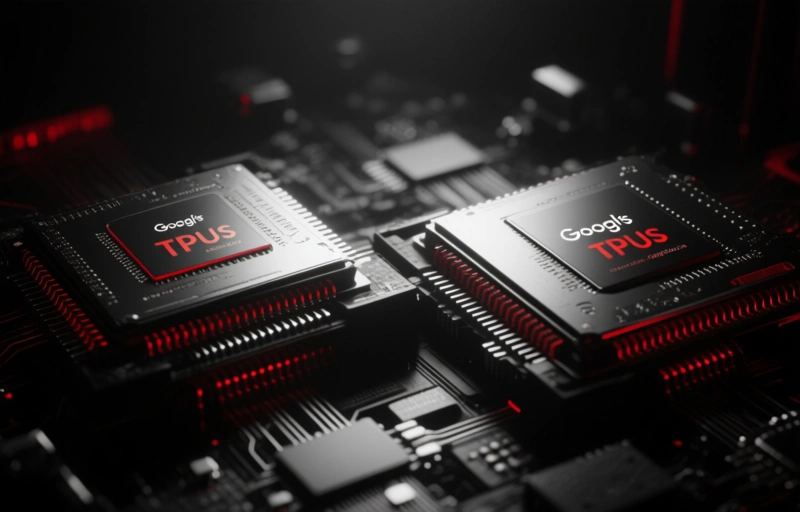
Google unveils its eighth-generation TPUs—two custom chips designed for the agentic era, where AI takes action independently. Faster, smarter, and built for real-world impact.
Google just dropped its eighth generation of TPUs, and honestly, it’s a big deal. We’re talking about two new chips designed specifically for the agentic era—where AI doesn’t just answer questions but actually takes action on your behalf. Think of it like upgrading from a calculator to a personal assistant that can run your errands.
### What Are TPUs, Anyway?
TPUs, or Tensor Processing Units, are Google’s custom-built chips for machine learning. They’re not your average computer processor. While your laptop’s CPU handles everyday tasks, TPUs are optimized for the heavy math that powers neural networks. The new eighth-gen chips promise faster training and inference, which means AI models can learn quicker and respond in real time.
### Two Chips, One Vision
This generation comes with two variants. One is built for training massive models—the kind that takes weeks of compute time. The other is for inference, actually running those models in production. By splitting the workload, Google is making AI more efficient and accessible. It’s like having a dedicated chef and a server in a restaurant instead of one person doing both.
### Why the Agentic Era Matters
The term "agentic" might sound fancy, but it’s simple: AI that can act independently. Imagine a virtual assistant that books your flights, manages your calendar, and even negotiates with customer service—all without you lifting a finger. These new TPUs are designed to handle that complexity without lag. For businesses, this means faster automation and smarter decision-making.
### Real-World Impact
- **Healthcare:** AI agents could analyze medical scans and suggest treatments in seconds.
- **Finance:** Automated trading systems that adapt to market changes instantly.
- **Customer Service:** Bots that actually solve problems instead of just reciting FAQs.
- **Logistics:** Smart routing that adjusts to traffic and weather in real time.
> "The future isn’t about AI that thinks for you—it’s about AI that does for you."
### What This Means for You
If you’re a developer or a business owner, this is huge. These chips will likely power Google Cloud’s AI services, meaning you can access them without building your own infrastructure. For everyday users, expect smarter Google products—from Search to Assistant—that feel more proactive.
### The Bottom Line
Google is betting big on agentic AI, and these TPUs are the engine under the hood. They’re faster, more specialized, and built for a world where AI doesn’t just wait for your command. We’re moving from reactive to proactive tech, and these chips are the first step.
What do you think? Are you ready for AI that acts on its own? Let me know in the comments.