Hannah Doran's Award-Winning Play on Brooklyn Butcher Shop
Carmen López ·
Listen to this article~4 min
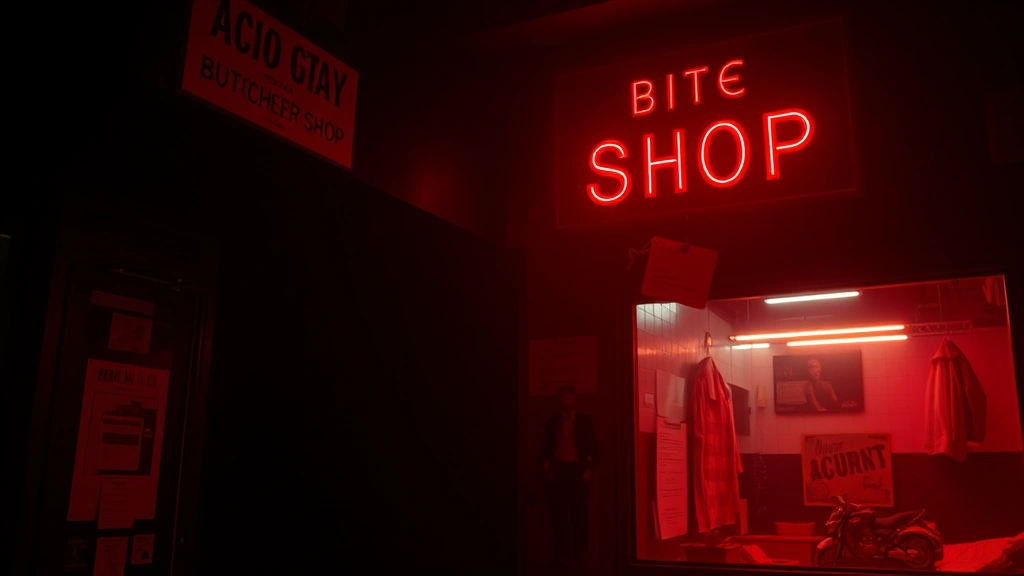
Hannah Doran's award-winning play offers a sharp, human look at the work and neighborhood politics inside a Brooklyn butcher shop, capturing a changing community.
Let's talk about something that cuts deep into the heart of a community. Hannah Doran's award-winning play isn't just theater—it's a raw, unflinching look at the work and politics simmering behind the counter of a Brooklyn butcher shop. You can almost smell the sawdust and hear the cleaver hitting the block.
It's one of those stories that feels both incredibly specific and universally human. Doran has crafted something special here, something that earned its accolades by speaking truth in a way only great art can.
### The World Behind the Counter
What makes this play so compelling? It's the details. The physical labor, the precision of the cuts, the rhythm of a day that starts before dawn. Butchers aren't just preparing meat—they're performing a craft that's been passed down for generations. Doran captures that beautifully.
She doesn't shy away from the politics either. We're talking about a neighborhood in constant flux, where tradition bumps up against gentrification daily. The butcher shop becomes a microcosm of Brooklyn itself—a place where old and new negotiate space, sometimes gracefully, sometimes with tension.
### Why This Story Resonates Now
We're living in a time when people crave authenticity. There's something profoundly real about this setting that digital life can't replicate. The play reminds us of the value of skilled hands, of knowing where your food comes from, of community spaces that aren't algorithms.
Doran's writing has that sharp quality that makes you lean forward in your seat. It's observational without being cold, critical without being cynical. She finds the drama in everyday transactions and the poetry in practical work.
Here's what makes the play's perspective so unique:
- It treats manual labor as worthy of serious artistic exploration
- It examines how local businesses become political battlegrounds
- It finds humor and humanity in unexpected places
- It questions what we preserve and what we sacrifice as neighborhoods change
### The Human Element at the Core
At its heart, this is about people. The butcher who's seen the block change three times over. The new resident who wants organic, grass-fed everything. The longtime customer who comes for the cuts and stays for the conversation.
Doran understands that politics isn't just about elections—it's about who gets to exist in a space, whose work is valued, whose history gets remembered. The butcher's block becomes a stage where these questions play out daily.
One character in the play says something that sticks with you: "Every cut tells a story. Where the animal lived, how it was raised, who prepared it, who will eat it." That's the level of detail Doran brings to this world.
### Why Award Panels Took Notice
When this play started winning awards, it wasn't just because of clever writing or strong performances. It was because Doran tapped into something we're all feeling—the tension between progress and preservation, between global markets and local shops.
She makes you care about characters you might walk past every day. She finds the epic in the everyday. That's what great playwrights do—they show us our world through fresh eyes.
The play's success suggests we're hungry for stories about real work, about places that anchor communities, about the politics of our daily bread. Or in this case, our daily steak.
It's running now, and if you get the chance to see it, you should. Not because it's "important theater" but because it's human theater. The kind that stays with you, that makes you look differently at your own neighborhood on the walk home.