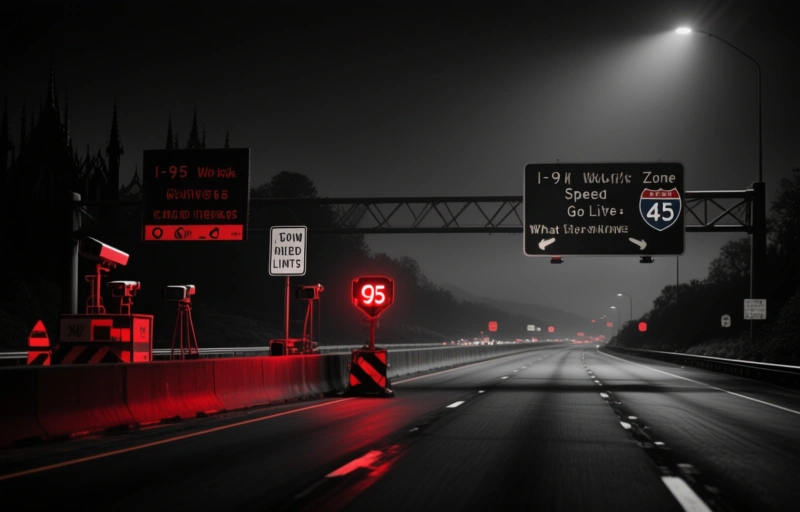
I-95 Work Zone Speed Cameras Go Live: What Drivers Need to Know
Carmen López ·
Listen to this article~4 min
I-95 work zone speed cameras are now live and enforcing speed limits. Learn how they work, what fines to expect, and how to avoid a ticket on the highway.
If you drive on I-95, you've probably seen the signs warning about work zone speed cameras. Well, now they're actually going live. This isn't just another warning — it's a real change that could hit your wallet if you're not careful.
Let's break down what's happening, why it matters, and how you can avoid getting a ticket.
### What's Changing on I-95?
The new speed cameras are being installed in active work zones along I-95. These aren't your typical traffic cameras. They're specifically designed to catch drivers speeding through construction areas where workers are present.
Here's the key thing: they're already live. That means if you're cruising through a work zone at 70 miles per hour in a 55 mph zone, the camera will catch you. No flashing lights, no police car — just a ticket in the mail a few weeks later.

### How Do These Cameras Work?
The system uses radar to detect your speed as you approach and pass through the work zone. If you're going over the limit, the camera snaps a photo of your license plate. That photo gets sent to a processing center where they verify the violation.
- The cameras operate 24/7 in active work zones
- They capture both speed and time stamps
- Tickets are mailed to the registered owner of the vehicle
- There's no grace period — enforcement started immediately
### What Are the Fines?
This is where it gets real. Fines start at $50 and can go up to $200 for repeat offenders. But here's the thing: in some states, these tickets can also add points to your license, which means higher insurance rates down the road.
For a first offense, you're looking at around $50 to $100. If you get caught again within a year, that number jumps to $150 or more. And if you're really speeding — like 20 mph over the limit — expect the maximum fine.
### Why Now?
Work zone accidents have been on the rise across the country. In 2025 alone, there were over 100,000 crashes in construction zones on U.S. highways. That's a lot of people getting hurt, including workers who are just trying to do their jobs.
The cameras are part of a larger push to make work zones safer. Studies show that when drivers know cameras are watching, they slow down by an average of 5 to 10 mph. That might not sound like much, but it can mean the difference between a close call and a tragedy.
### What Drivers Should Do
If you're commuting on I-95, here's some practical advice:
- Slow down as soon as you see work zone signs
- Keep an eye on your speedometer — it's easy to creep up without noticing
- Give yourself extra time for your commute, especially during construction season
- Don't rely on your car's cruise control alone; stay alert
One driver I talked to said he got a ticket for going 62 in a 55 zone. He didn't even realize he was speeding. That's how easy it is to get caught.
### The Bottom Line
These cameras aren't going anywhere. They're here to stay, and they're probably going to expand to more highways in the coming years. The best way to avoid a ticket is simple: obey the speed limit in work zones.
It's not just about saving money. It's about keeping everyone safe — including the workers who are out there fixing our roads. So next time you see those orange cones, take your foot off the gas. Your wallet and your conscience will thank you.