Inside the Studios of Cartoonists Martin Rowson and Ella…
William Harrison ·
Listen to this article~4 min
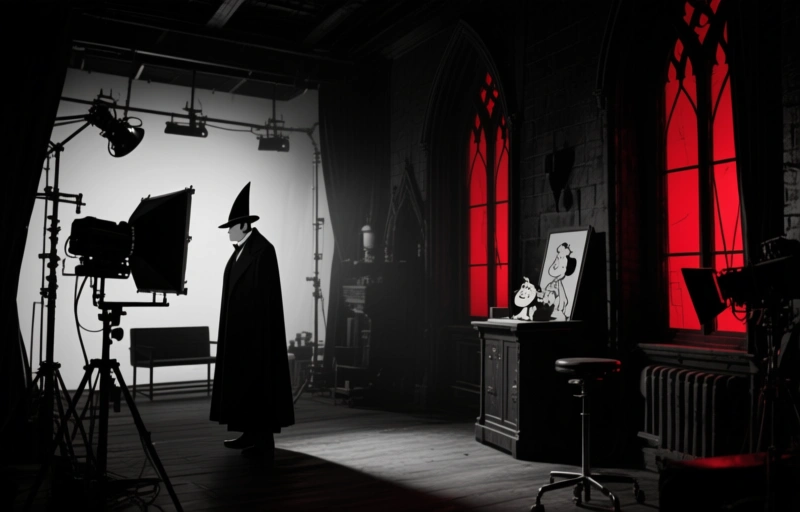
A behind-the-scenes look at the creative process of cartoonists Martin Rowson and Ella Baron. Discover how they transform news into powerful visual commentary.
Ever wonder what really happens behind the scenes when a cartoonist sits down to work? It's not just about drawing funny pictures. It's a whole process of thinking, sketching, and refining ideas until they hit just the right note. Today, we're getting a rare glimpse into the workspaces and methods of two brilliant contemporary cartoonists.
Martin Rowson and Ella Baron are known for their sharp wit and distinctive styles. They've each carved out a unique space in the world of political and social commentary. But how do they translate the day's news into a single, powerful image? Let's pull back the curtain.
### The Tools of the Trade
Every artist has their favorite tools, and cartoonists are no different. For some, it's a specific brand of ink pen that glides just right. For others, it might be a particular type of paper that holds the ink without bleeding. The physical act of drawing is deeply personal.
You'll often find a chaotic desk littered with sketches, reference materials, and half-finished ideas. That mess isn't a sign of disorder—it's a sign of a mind at work. It's where the first rough doodle transforms into a finished piece that can make you laugh, think, or even get a little angry.
### From Idea to Ink
The journey from a blank page to a published cartoon is fascinating. It often starts with a headline, a political gaffe, or a social trend. The cartoonist has to digest that information, find the absurdity or truth within it, and then visualize it in a way that's instantly understandable.
It's a tightrope walk. You need to be clever without being obscure, critical without being cruel, and timely without being fleeting. It's no small feat. Rowson and Baron have mastered this balance, which is why their work resonates so deeply.
Here’s a quick look at what their creative process often involves:
- Reading and absorbing vast amounts of news
- Rapid sketching to explore different visual metaphors
- Refining the chosen sketch for clarity and impact
- Inking the final drawing with precision
- Adding subtle details that reward a closer look
### The Power of a Single Image
In a world saturated with text and video, a great cartoon cuts through the noise. It can summarize a complex political scandal in a way a thousand-word article can't. It can highlight hypocrisy with a simple, elegant juxtaposition.
That's the real magic. A cartoonist isn't just an illustrator; they're a commentator, a satirist, and a storyteller all rolled into one. Their work lives in that space between journalism and art, and it's incredibly powerful.
As one observer of the craft once noted, *'A good cartoon is an argument made with lines instead of words.'* It’s a thought that sticks with you. The best ones make you see a familiar situation in a completely new light, and that’s a gift.
### Why Their Work Matters Today
We're living in visually-driven times. Social media platforms thrive on images that convey meaning quickly. In this landscape, the skills of a sharp editorial cartoonist are more relevant than ever. They provide a necessary pause for reflection, a moment of critical thought wrapped in humor or stark imagery.
Understanding how artists like Rowson and Baron operate gives us a greater appreciation for the craft. It reminds us that this work is intentional, thoughtful, and deeply connected to the world around us. It's not just a quick doodle; it's a carefully constructed point of view.
So next time you see a political cartoon, take an extra second. Look at the lines, the expressions, the tiny details in the background. There's a whole world of thought in that single frame, a world built by artists who spend their days making us see things differently.