Jony Ive: Why Touchscreens Fail in Car Design
Carmen López ·
Listen to this article~4 min
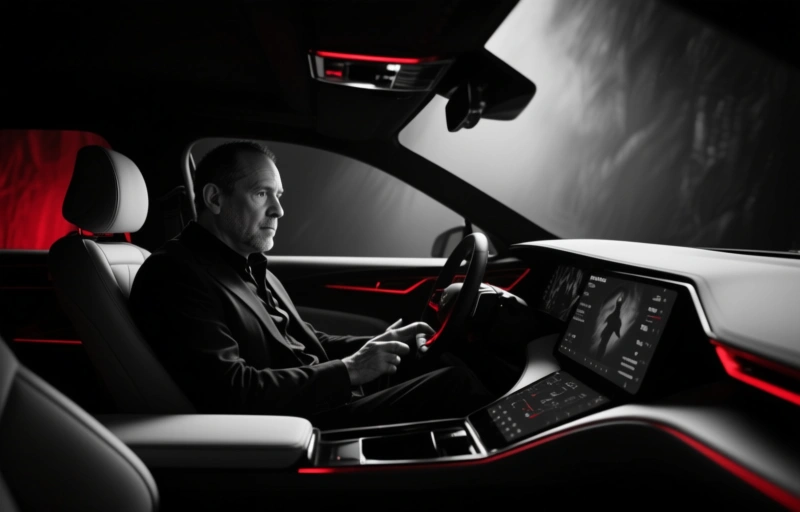
Legendary designer Jony Ive critiques touchscreen-heavy car interiors, arguing they create dangerous distractions and break the human-machine connection. Discover his philosophy on intuitive design.
You know that feeling when you're driving and you just can't find the right button on a massive touchscreen? It's frustrating, right? Well, Sir Jony Ive, the legendary designer behind Apple's most iconic products, feels exactly the same way. He recently shared some fascinating thoughts on why slapping a giant tablet on a dashboard is, in his view, a fundamental design failure for cars.
Ive's philosophy is all about human connection. He believes a car's interior should feel intuitive, almost like an extension of the driver. When you're navigating a winding road at 60 miles per hour, you shouldn't have to take your eyes off the asphalt to hunt for a virtual button. That's a recipe for distraction, and frankly, it breaks the sacred bond between human and machine.
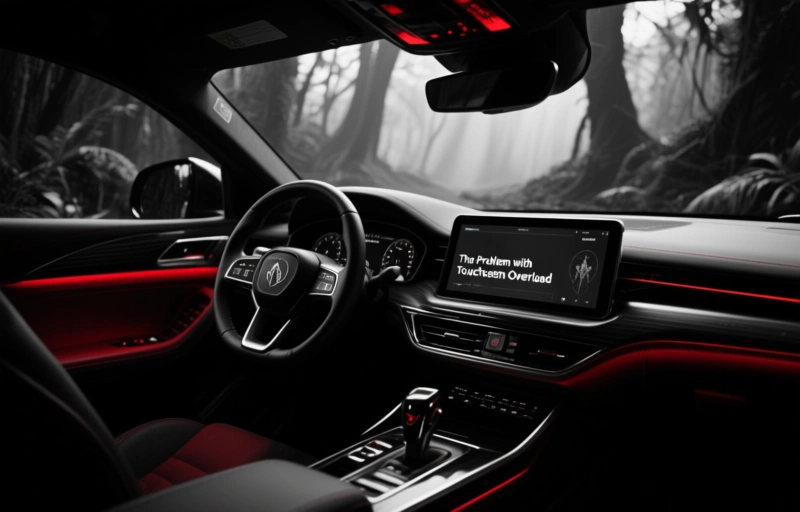
### The Problem with Touchscreen Overload
Modern car interiors have become digital jungles. We've traded tactile knobs and physical switches for glossy, fingerprint-smudged glass. Ive argues this creates a dangerous cognitive load. Think about it: adjusting the climate control or changing the radio station should be a simple, muscle-memory action. With a touchscreen, it becomes a visual task that pulls your focus away from the road.
- **Loss of Tactile Feedback:** You can't feel a touchscreen. A physical dial gives you confirmation through resistance and click.
- **Visual Distraction:** Every interaction requires you to look, find the icon, and tap precisely.
- **Context Switching:** Your brain has to shift from "driving" mode to "tablet operation" mode constantly.
It's not just about safety, though that's a huge part. It's about the quality of the experience. A great design should disappear, letting you focus on the joy of driving.
### Designing for the Human Experience
So, what's the alternative? Ive champions a return to thoughtful, human-centric design. It's about creating interfaces that you can operate by feel. Imagine a volume knob you can turn without looking, or a temperature slider with a distinct texture. These elements create a seamless, almost subconscious interaction.
He famously said, "A large touchscreen doesn't work in a car." That statement cuts to the heart of the issue. It's not that technology is bad; it's that thoughtless implementation is. The goal should be to integrate technology so elegantly that it enhances the drive, not interrupts it. The cabin should feel like a cockpit designed for a pilot, not a passenger trying to operate a confusing kiosk.
This philosophy is what he brought to projects like the Ferrari Luce's interior. The focus there was on materials, ergonomics, and creating a space where every control has purpose and place. It's a reminder that in our rush to be futuristic, we sometimes forget what makes an interface truly great: simplicity and intuition.
### The Future of Car Interiors
Where do we go from here? The industry is at a crossroads. Voice assistants are getting better, but they're not perfect. Haptic feedback in touchscreens tries to mimic physical buttons, but it's often a poor imitation. The real innovation might be a hybrid approach—thoughtfully placed physical controls for critical functions, complemented by smart, contextual digital displays for less urgent information.
The next generation of car interiors won't be judged by the size of their screen, but by how little you have to think about using it. As Ive's critique highlights, true luxury in a car isn't about more pixels; it's about more presence. It's about designing an environment that lets you connect with the road, not fight with a menu. That's a design challenge worth pursuing, and it starts by listening to the driver, not just following a tech trend.