Maurizio Cattelan's Latest Art: A Call for Public Confession
Carmen López ·
Listen to this article~4 min
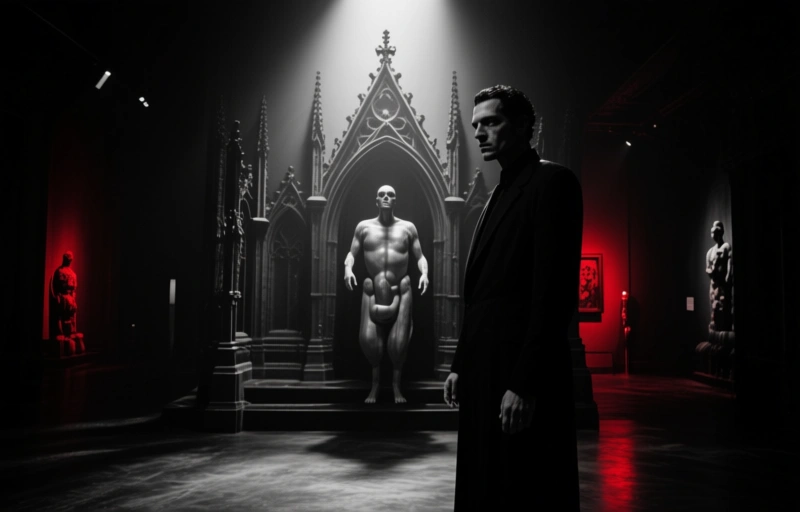
Provocative artist Maurizio Cattelan's latest work invites public confession, turning personal secrets into participatory art. This exploration of vulnerability taps into our digital-age longing for connection.
You know that feeling when you've got something weighing on your mind? That little secret you've been carrying around? Well, contemporary artist Maurizio Cattelan is inviting you to share it with the world. His latest provocative work centers entirely on public confession, and it's got everyone talking.
Cattelan has never been one to shy away from controversy. Remember that banana duct-taped to a wall that sold for $120,000? Or the solid gold toilet titled "America" that was actually stolen from an exhibition? This artist thrives on making us question value, art, and our own participation in the spectacle.
### What's This New Project About?
This time, Cattelan isn't creating a physical object you can buy or sell. He's creating an experience. The core of the work is an open invitation for people to confess their sins, secrets, and regrets. It's a digital-age confessional booth, stripped of privacy and religious context, laid bare for public consumption. The artist is essentially turning the audience into the artwork itself.
Think about that for a second. Your confession, your vulnerability, becomes part of a larger artistic statement. It's a powerful, and frankly, unsettling concept. What would you be willing to share? And more importantly, why would you share it in such a public forum?
### The Psychology Behind Public Sharing
We live in an era of oversharing. Social media has normalized broadcasting our lives, but usually, we curate the highlights. Cattelan is asking for the opposite—the lowlights, the things we normally hide. There's a strange catharsis in confession, a psychological relief that's been documented for centuries.
- It reduces the mental burden of carrying a secret alone
- It can create a sense of connection with others who have similar experiences
- It allows for a narrative reframing, where you control the story of your own transgression
But doing this anonymously online is one thing. Attaching your confession to a famous artist's project, where it becomes part of art history? That's a whole different level of exposure.
### Why This Matters Right Now
This work hits differently in 2026. We're more digitally connected than ever, yet reports of loneliness and isolation are at an all-time high. Authentic human connection feels scarce. Cattelan's project taps directly into this cultural nerve. He's creating a space for raw, unfiltered truth in a world often dominated by filters and façades.
As one observer noted, "The most interesting part won't be the confessions themselves, but seeing who participates and what that says about our need to be seen, even in our perceived flaws."
It raises endless questions. Is this art, therapy, or a social experiment? Is it exploitative or liberating? The beauty—and frustration—of Cattelan's work is that he never gives you the answers. He just sets the stage and lets us, the public, write the script with our own actions.
Will people confess to minor infractions or major life events? Will the confessions be profound, humorous, or tragic? The success of the piece depends entirely on public participation. In that way, it's a brilliant mirror. The artwork becomes a direct reflection of our collective courage, our shame, and our desire for absolution in an increasingly secular world.
So, what do you think? Does the idea of public confession as art intrigue you, or does it make you deeply uncomfortable? Maybe that's exactly the point Cattelan is trying to make. The line between private life and public performance has never been thinner, and he's just holding up a magnifying glass to show us how blurry it's truly become.