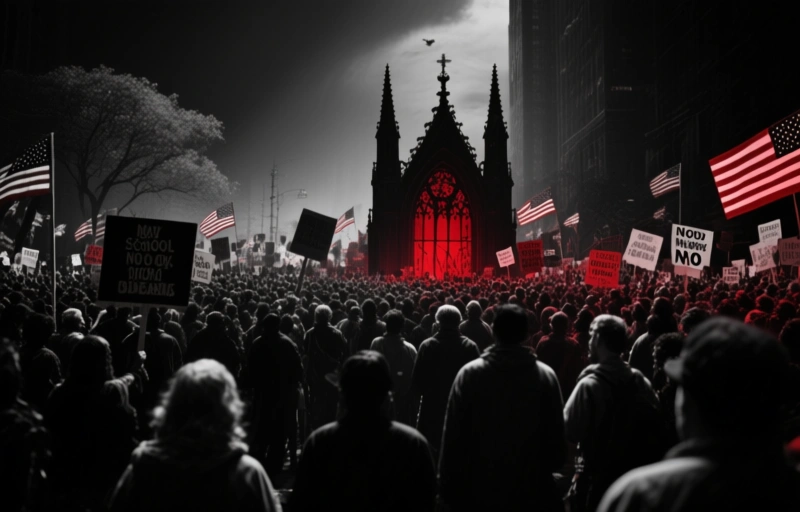
Tens of thousands across the US joined a May Day 'no school, no work, no shopping' protest and economic blackout to demand better wages and workers' rights.
Tens of thousands of people across the United States took part in a nationwide 'no school, no work, no shopping' protest on May Day, also known as International Workers' Day. The event, which also functioned as an economic blackout, aimed to draw attention to workers' rights, income inequality, and the rising cost of living.
### What Was the May Day Protest?
The protest, organized by various grassroots groups and labor unions, encouraged participants to stay home from work, keep their kids out of school, and avoid making any purchases for an entire day. The idea was simple: by withdrawing their labor and consumer spending, everyday Americans could send a powerful message to corporations and policymakers.
This wasn't just a symbolic gesture. Organizers hoped the collective action would highlight how much the economy relies on the average worker and consumer. They argued that without people clocking in and spending money, the system would grind to a halt.
### Why an Economic Blackout?
Economic blackouts have become a popular form of protest in recent years. The strategy is straightforward: when millions of people stop spending money for 24 hours, it creates a noticeable dip in revenue for major retailers and service providers. It's a way for people who feel unheard by the political system to use their wallets as a megaphone.
Key goals of the blackout included:
- Demanding higher wages that keep up with inflation
- Calling for better working conditions and paid leave
- Protesting corporate price gouging and record profits
- Advocating for affordable housing and healthcare
### Who Participated?
Participants came from all walks of life. Service workers, teachers, retail employees, and even some remote tech workers joined in. In major cities like New York, Los Angeles, and Chicago, small rallies and marches took place alongside the economic boycott.
One participant in Chicago told local reporters, "I can't afford to take a day off, but I can't afford to stay silent either. This is the only way to make them listen."
### The Impact of the Protest
While it's hard to measure the exact economic impact of a single-day event, early reports suggest that foot traffic at major retail chains dropped significantly in urban areas. Some small businesses that chose to close in solidarity reported a sense of community, even if they lost a day's revenue.
Critics argue that these actions don't create lasting change. But supporters say that's missing the point. The real goal is to build momentum and show that people are willing to organize for a better future.
### What Comes Next?
Organizers have already hinted at more coordinated actions later this year. They're planning a series of smaller, targeted boycotts against specific companies known for labor violations or excessive price hikes.
For now, the May Day protest served as a reminder that when people come together, even for just one day, their collective power is undeniable. Whether you agree with the tactics or not, the message was loud and clear: Americans are tired of being squeezed, and they're ready to push back.