New York's Proposed 3D Printer Ban: What You Need to Know
Carmen López ·
Listen to this article~4 min
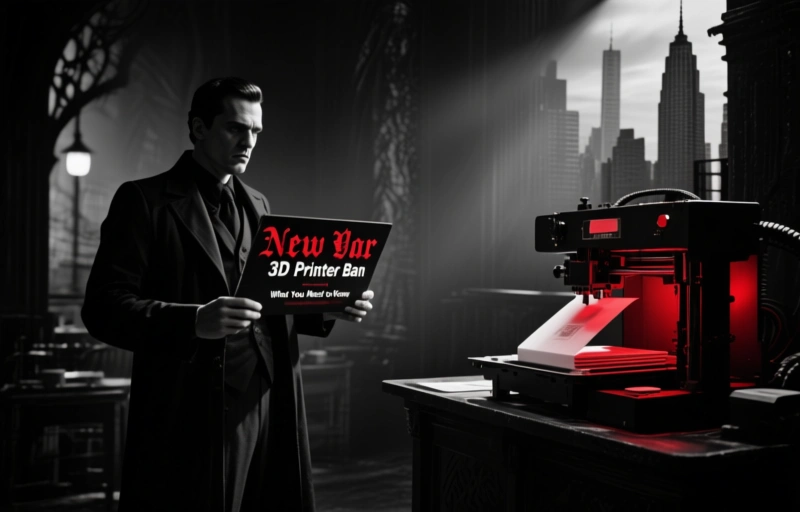
New York's proposed 3D printer regulations could impact makers and small businesses. Learn what the legislation means for innovation, costs, and creative freedom in the maker community.
So, you've probably heard the buzz. New York lawmakers are floating an idea that's got the maker community talking—and not in a good way. They're proposing regulations that could effectively shut down personal 3D printing as we know it. It's like they want to hit Ctrl+Alt+Delete on your entire workshop.
Let's break this down over a virtual coffee, because this matters if you're into DIY projects, prototyping, or just creating cool stuff in your garage.
### What's Actually in the Proposal?
The legislation isn't just about banning printers outright. It's more nuanced—and in some ways, more concerning. The bill focuses on regulating "undetectable firearms," which sounds reasonable on the surface. But here's the catch: it defines components so broadly that nearly any 3D-printed object could fall under scrutiny.
We're talking about parts that weigh less than 3 ounces, or pieces smaller than your palm. That covers a huge range of everyday prints—from custom phone cases to replacement knobs for your kitchen cabinets.
### Why This Hits Home for Makers
Remember when you printed that custom bracket to fix your wobbly shelf? Or when you designed a unique toy for your niece's birthday? Under this proposal, those creations could technically require serialization and registration. The paperwork alone would make most hobbyists throw their hands up.
- The cost of compliance could add hundreds of dollars to your projects
- Waiting periods for approval could stretch to 30 days or more
- The definition of "firearm component" remains dangerously vague
- Small businesses using 3D printing for prototypes would face new hurdles
It's not just about guns—it's about treating every maker with a 3D printer like they're running an unlicensed factory.
### The Bigger Picture on Innovation
Here's what keeps me up at night. 3D printing has democratized manufacturing in ways we're just beginning to understand. Students in Brooklyn are printing prosthetic hands for under $50. Artists in Queens are creating sculptures that would cost thousands through traditional methods. Medical researchers are prototyping devices that could save lives.
As one maker put it recently: "This isn't about controlling dangerous technology—it's about controlling who gets to create."
When you put up barriers to basic creation tools, you're not stopping bad actors. You're stopping the next generation of inventors from even getting started.
### What Comes Next for New York Makers
The bill hasn't passed yet, and there's still time for voices to be heard. Community workshops across the state are organizing information sessions. Local maker spaces are hosting "print-ins" to demonstrate the positive uses of this technology.
If you're in New York and this matters to you, now's the time to contact your representatives. Share stories about how 3D printing has helped your community, your business, or your family. Show them the replacement part you printed for your neighbor's wheelchair. Bring the custom orthotic that helped your child walk more comfortably.
Because here's the truth: technology itself isn't dangerous. It's how we choose to regulate it—and who we choose to listen to when making those regulations.
### Looking Beyond the Headlines
This isn't just a New York story. Similar proposals have popped up in California, Illinois, and Massachusetts. What happens in Albany could set a precedent that spreads across the country.
We need smart regulations that address real concerns without crushing innovation. We need definitions that distinguish between a weapon and a widget. Most importantly, we need to remember that tools are just tools—it's human intention that determines their use.
So keep creating. Keep sharing what you make. And maybe, just maybe, we can show lawmakers that the future of manufacturing isn't in their conference rooms—it's in our garages, our studios, and our imaginations.