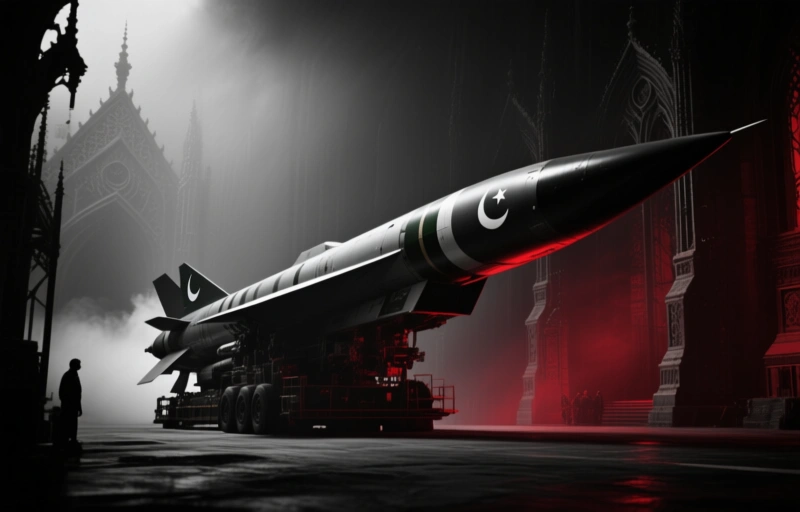
Pakistan unveils a supersonic cruise missile built on Chinese technology, reshaping South Asia's military balance. Learn what makes it fast, its regional impact, and what it means for global security.
Pakistan has officially unveiled its latest supersonic cruise missile, a weapon system built on Chinese technology. This development marks a significant leap in the country's military capabilities and could reshape the regional balance of power.
So, what exactly does this mean? Let's break it down in plain English.
### What Makes This Missile Special?
First off, it's supersonic. That means it travels faster than the speed of sound — well over 767 miles per hour. In practical terms, this makes it incredibly hard to intercept. Most air defense systems are designed to handle slower, subsonic threats. A supersonic missile cuts down reaction time dramatically.
Here are the key specs that stand out:
- **Speed**: Supersonic, exceeding Mach 1 (around 767 mph at sea level).
- **Range**: Estimated at several hundred miles, allowing it to strike deep into enemy territory.
- **Guidance**: Likely uses a mix of inertial navigation and GPS, with possible terminal radar homing for precision.
- **Launch Platform**: Can be deployed from ground launchers, ships, or aircraft — making it versatile.
This isn't just a faster version of older missiles. It represents a new generation of strike capability.
### The Chinese Connection
Pakistan has a long history of defense cooperation with China. This missile is no exception. It's widely believed to be based on the Chinese YJ-12 or a similar design. But here's the thing: Pakistan didn't just copy it. They adapted it to their own needs, integrating local manufacturing and possibly tweaking the guidance systems.
Think of it like this: you buy a high-end sports car, but then you tune the engine, upgrade the suspension, and add your own navigation system. The result is something familiar but uniquely yours.
This partnership has been a win-win. China gets a reliable ally in South Asia, and Pakistan gains access to cutting-edge technology without the heavy price tag of developing it from scratch.
### Regional Implications
Let's be real — this missile changes the game. India, Pakistan's primary rival, has been investing heavily in missile defense systems like the S-400. But a supersonic cruise missile poses a serious challenge to even the best defenses.
The speed makes it difficult to track, and its low-altitude flight profile lets it fly under radar coverage. It's like trying to catch a hummingbird with a butterfly net.
- **For Pakistan**: It strengthens their deterrence posture, giving them a credible second-strike capability.
- **For India**: It forces a rethink of defense strategies, possibly accelerating their own missile and countermeasure programs.
- **For the US and NATO**: It highlights the growing sophistication of Chinese-backed military tech in the region.
### What This Means for Global Security
This isn't just a South Asian story. It's a reminder that missile technology is spreading. More countries now have access to supersonic and even hypersonic weapons. That trend affects everyone.
Consider this: if a conflict breaks out, the ability to strike quickly and accurately changes the calculus. Diplomacy becomes harder when both sides feel they have a first-strike advantage.
But here's the hopeful side — these weapons also create incentives for arms control. When both sides have equally scary toys, they might think twice before using them.
### Bottom Line
Pakistan's new missile is a serious piece of hardware. It's fast, it's versatile, and it's built on proven Chinese tech. Whether you see it as a necessary deterrent or a destabilizing force, one thing's clear: the region just got a lot more complicated.
Stay tuned — this story is far from over.