Polyend's AI-Powered Multi-FX Pedal with Magnetic Plates
William Harrison ·
Listen to this article~5 min
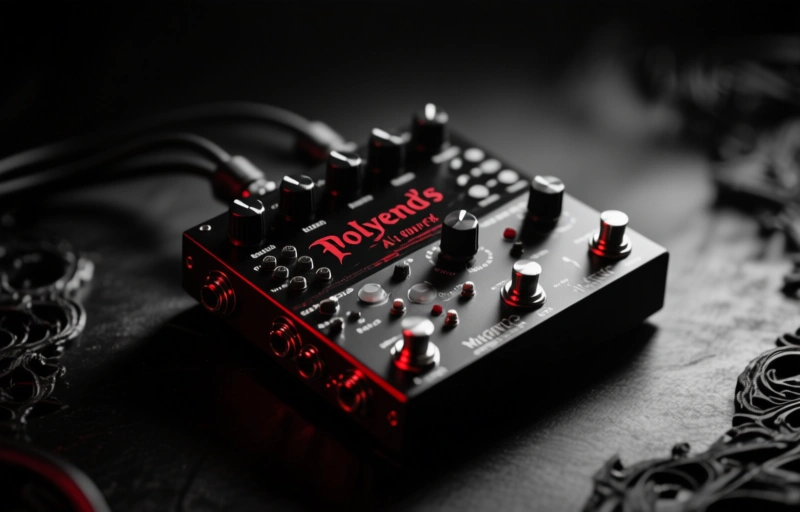
Polyend's new AI-powered multi-effects pedal generates custom signal chains from text prompts and features swappable magnetic face plates, creating a new conversation between musicians and their gear.
So, Polyend just dropped something that's got the music tech world buzzing. It's not just another effects pedal—it's what they're calling an "Endless AI Prompted Multi-FX" unit with swappable magnetic face plates. Let's unpack what that actually means for musicians and producers.
You know how guitar pedals usually have fixed functions? This one's different. It uses AI to generate effects based on text prompts you give it. Type in "underwater cathedral" or "glitchy robot dreams" and the pedal creates unique signal chains to match that vibe. It's like having a creative partner right there on your pedalboard.
### How Does This AI Thing Actually Work?
The core idea is pretty wild when you think about it. Instead of scrolling through presets, you're describing the sound you want in plain English. The AI interprets your words and builds custom effect combinations from its library. We're talking about algorithms that understand concepts like "spacey," "aggressive," or "melancholy" and translate them into actual audio processing.
What's interesting is how this changes the creative workflow. You're not just tweaking knobs anymore—you're having a conversation with your gear. It reminds me of those moments when you're trying to explain a sound to a bandmate and they just get it. Except now, your pedalboard gets it too.
### Those Magnetic Face Plates Are Smarter Than They Look
Okay, the swappable magnetic plates aren't just for looks. Each plate represents a different "personality" or effect family for the AI to work with. Swap out the plate, and you're giving the system a new context or starting point. It's physical, tactile, and surprisingly intuitive.
Think about it like this:
- Different plates could focus on specific genres or eras
- They might emphasize certain effect types like modulation or time-based effects
- Some could be designed for particular instruments beyond guitar
- They create a physical connection to the digital process
It's that blend of digital convenience with physical interaction that makes this feel genuinely new. You're not just staring at a screen—you're handling something real that changes how the digital brain operates.
### What This Means for the Future of Music Gear
Here's where it gets really interesting. This isn't just about one cool pedal. It's about a shift in how we interact with our tools. When gear starts understanding our intentions rather than just executing commands, the relationship changes fundamentally.
I keep thinking about how photographers describe working with certain cameras—how the tool becomes an extension of their vision rather than a barrier. That's what Polyend seems to be aiming for here. The technology fades into the background, and the creative impulse takes center stage.
Of course, there are questions. How much control do you really have when AI is making decisions? Can you fine-tune the results, or are you stuck with what the algorithm gives you? These are the conversations we'll be having as more of this tech hits the market.
### Is This Just a Gimmick or Something Real?
Let's be honest—the music tech world has seen plenty of flashy innovations that didn't change much. But this feels different. It's addressing a real creative challenge: how to break out of familiar patterns and discover new sounds without getting lost in endless menus and parameters.
As one producer friend put it when I described the concept: "Sometimes I don't know what I want until I hear it. If a pedal can help me find those 'I didn't know I wanted that' moments, that's valuable."
That's the promise here. Not that AI will replace human creativity, but that it might help us access parts of our creativity that get buried under technical complexity and routine. The magnetic plates add that physical, customizable element that makes the whole system feel personal rather than generic.
What's clear is that we're entering a new phase where our tools are starting to understand context and intention. Whether this particular implementation becomes standard or evolves into something else entirely, the direction feels significant. The conversation between musician and machine is getting more interesting, more nuanced, and frankly, more human.