Saudi Arabia Halts Mukaab 'Cube' Megaproject
William Harrison ·
Listen to this article~4 min
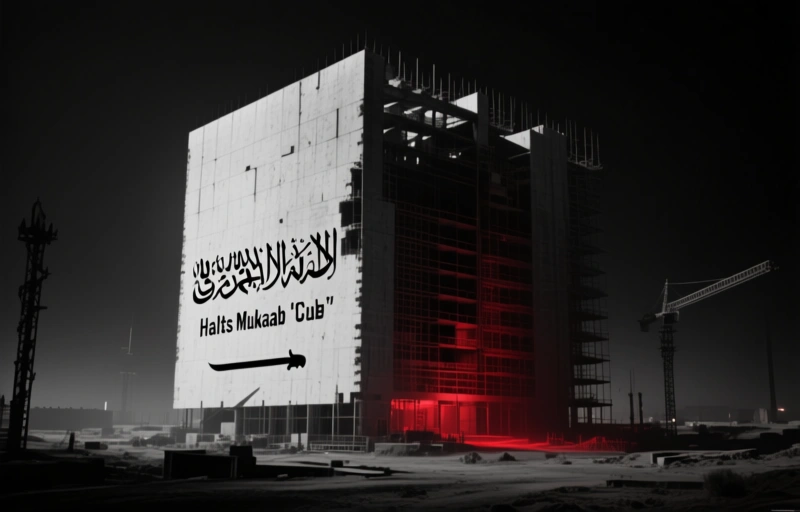
Saudi Arabia has reportedly shelved the Mukaab 'Cube' project, a monumental skyscraper central to its Vision 2030 plans. This pause on the world's largest building signals a potential strategic shift in the kingdom's landmark development agenda.
Well, here's a development that's got everyone talking. Saudi Arabia has reportedly put the brakes on one of its most ambitious and talked-about megaprojects: the Mukaab, also known as 'The Cube.' This wasn't just any building. It was pitched as the world's largest skyscraper, a monumental structure designed to be a centerpiece of the new Riyadh downtown district. The news, while not yet officially confirmed by the Saudi government, marks a significant shift in the kingdom's breakneck development pace.
Let's be honest, the scale was almost unimaginable. The Mukaab was designed to be a cube-shaped skyscraper, each side stretching nearly 400 meters. To put that in perspective, it would have been taller than the Empire State Building if you laid it on its side. The vision was for a mixed-use behemoth containing residential spaces, hotels, commercial areas, and leisure facilities—all under one, absolutely massive roof.
### Why This Project Was a Big Deal
This wasn't just about building something tall. The Mukaab was a flagship project for Saudi Vision 2030, the kingdom's strategic plan to diversify its economy away from oil. It symbolized a new era of futuristic urbanism and technological ambition. The design promised a fully immersive digital experience inside, with a virtual reality layer projected across its vast interior surfaces. It was architecture as a digital canvas.
Its sudden shelving raises immediate questions. What happens to the billions already allocated? What does this mean for the contractors and international firms involved? And, perhaps most importantly, what signal does this send to global investors watching Saudi Arabia's transformation?
### Reading Between the Lines of a Pause
Megaprojects like this are complex beasts. They're not just construction challenges; they're financial, logistical, and environmental puzzles. A decision to 'shelve' a project of this magnitude usually points to a few key factors:
- **Economic Recalibration:** With fluctuating oil prices and global economic headwinds, even resource-rich nations must prioritize. The sheer capital required for the Mukaab is staggering, and funds might be redirected to other, perhaps more immediately critical, Vision 2030 initiatives.
- **Practical Feasibility:** Sometimes, the grand vision meets the hard reality of engineering and supply chains. The technical challenges of building a structure of this scale and complexity are unprecedented.
- **Strategic Reprioritization:** National development strategies evolve. The focus might be shifting from singular iconic structures to broader infrastructure or social projects that deliver value to a wider population base.
As one analyst recently noted, *"In megaprojects, a pause isn't always a stop. Sometimes it's a strategic breath, a chance to reassess and realign with broader goals."* This could very well be a recalibration, not a cancellation.
### The Ripple Effect on Global Ambition
This move is being watched closely far beyond the Middle East. For professionals in tech, urban development, and finance, it's a case study in the lifecycle of a 21st-century megaproject. It highlights the tension between visionary ambition and pragmatic execution. Other nations with their own grand architectural dreams will be taking notes.
For now, the future of the Mukaab is unclear. Will it be redesigned, scaled down, or quietly abandoned? Only time will tell. But its current status serves as a powerful reminder that in the world of transformative urban development, even the most solid-looking plans can change shape.