Team USA's AI Edge: How Tech Elevates Olympic Performance
Carmen López ·
Listen to this article~4 min
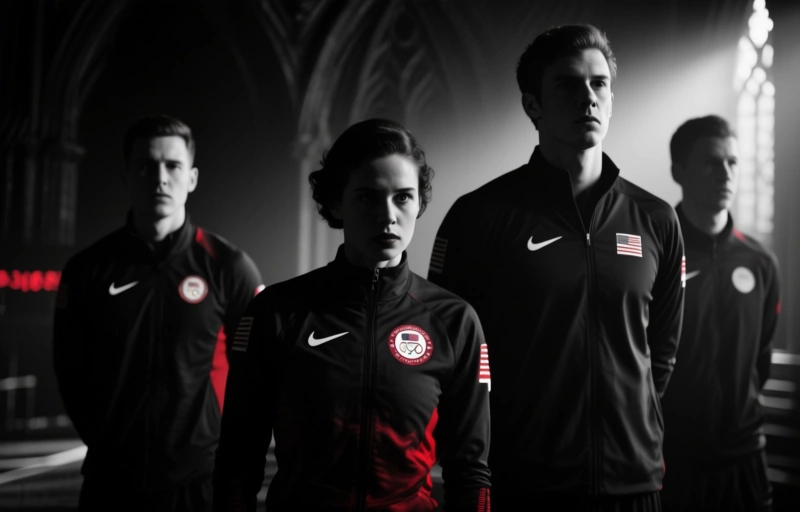
Discover how Team USA leverages cutting-edge AI tools to analyze performance, prevent injuries, and refine techniques, gaining a data-driven edge in elite competition.
You know that feeling when you watch an Olympic athlete and wonder, 'How do they do that?' Well, here's a secret—it's not just raw talent anymore. Technology is becoming a silent partner in pushing human limits, and artificial intelligence is leading the charge. For Team USA, this partnership is already changing the game.
It's about moving beyond guesswork. Coaches have always relied on their eyes and experience, but what if you could see the invisible? That's where AI steps in. By analyzing movement data, these tools can spot patterns and inefficiencies a human might miss. It's like having a super-powered second set of eyes that never blinks.
### The Data Behind the Gold
So, how does it actually work? Imagine an athlete performing a complex trick. Sensors and high-speed cameras capture every micro-movement—the angle of a knee, the rotation of a hip, the precise timing of a takeoff. This creates a massive stream of data. Too much for any person to process in real-time.
That's the AI's playground. It crunches those numbers instantly, comparing the performance against a perfect model. It can flag a slight imbalance or suggest a tiny adjustment in timing that could mean the difference between sticking a landing and a costly stumble. We're talking about improvements measured in inches and milliseconds, but at the elite level, that's everything.

### From Analysis to Actionable Insight
The magic isn't just in collecting data; it's in making it useful. AI tools don't just spit out complex charts. They translate that data into clear, visual feedback an athlete and coach can understand immediately. Think of it as a personalized performance dashboard.
- **Injury Prevention:** By analyzing stress patterns on joints and muscles, AI can predict overuse risks before they become injuries. This allows for smarter training loads.
- **Technique Refinement:** It can break down a skill into its component parts, showing exactly which phase needs work, turning a 'feel' into a fact.
- **Recovery Optimization:** AI can even help tailor recovery protocols by analyzing biometric data to see how an athlete's body is responding to training.
The goal is to create a continuous loop: perform, analyze, adjust, repeat. It makes training more efficient and far more precise.
As one sports scientist put it, 'We're not replacing the coach or the athlete's intuition. We're arming them with a level of insight that was simply science fiction a decade ago.' It's a tool for amplifying human potential, not replacing it.
### The Future of Competitive Training
This is just the beginning. As these AI models learn from more data, their predictions and suggestions will become even more nuanced. We're moving towards hyper-personalized training regimens that adapt day-by-day based on an athlete's condition. The playing field is getting smarter, and the athletes who leverage these tools effectively will have a distinct advantage.
For professionals and coaches, the message is clear: understanding and integrating AI-driven analytics is no longer a futuristic concept—it's becoming a core component of modern sports science. The quest for gold has entered a new, data-driven era, and it's fascinating to watch it unfold.