Trump: Iran Seeks Deal, Confirms Hormuz Blockade
Carmen López ·
Listen to this article~4 min
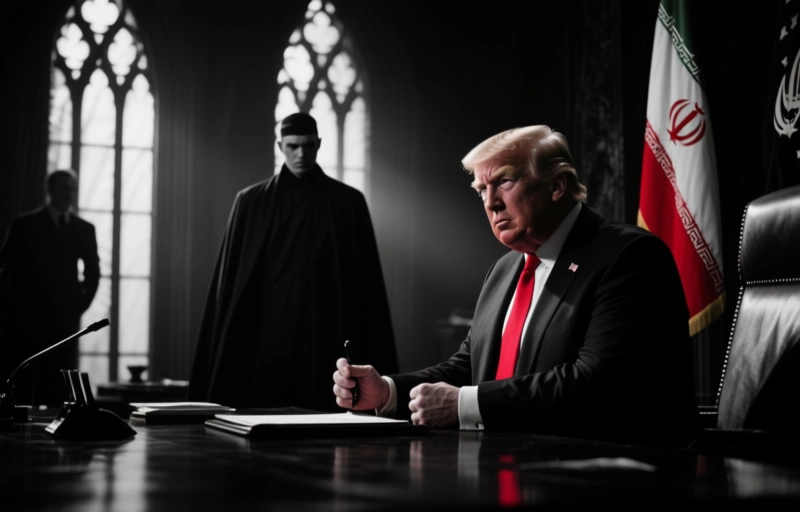
Former President Trump claims Iran seeks a deal while confirming a blockade of the critical Strait of Hormuz, creating a tense contradiction with major implications for global oil markets and stability.
Let's talk about what's happening in the Middle East right now. It's complicated, and honestly, a bit tense. The news is moving fast, and it can be hard to keep up with what's real and what's just noise. So, let's break it down together, like we're catching up over coffee.
Former President Donald Trump made some pretty significant statements recently. He claimed that Iran is signaling a desire to "work a deal." That's a big shift in tone, if true. We've seen years of back-and-forth, sanctions, and tough talk. The idea that there might be an opening for negotiation is huge news for global stability and, frankly, for gas prices here at home.
But here's the twist. In the same breath, Trump confirmed a blockade of the Strait of Hormuz. Now, if you're not familiar, this isn't just any waterway. It's one of the most critical maritime chokepoints on the planet. Think of it as the main artery for the world's oil supply. A blockade there doesn't just affect the region; it sends shockwaves through the entire global economy.
### Why the Strait of Hormuz Matters So Much
You might be wondering why everyone gets so worked up about this specific stretch of water. It's only about 21 miles wide at its narrowest point. But through that narrow passage, about 20% of the world's oil passes every single day. That's roughly 21 million barrels. When that flow gets interrupted, even for a short time, prices at the pump jump almost immediately. It's a direct line from geopolitical tension to your wallet.
- **Economic Lifeline:** For countries like Saudi Arabia, Iraq, and the UAE, it's their primary route to get oil to market.
- **Global Dependence:** Major economies in Asia and Europe rely heavily on this consistent supply.
- **Military Flashpoint:** Its strategic importance has made it a focal point for naval standoffs for decades.
So, when a major political figure talks about blocking it, markets listen. Closely.
### The Contradiction of Deal-Making and Blockades
This is where it gets really interesting, and honestly, a bit confusing. On one hand, you have a claim that Iran wants to negotiate. That suggests a move toward de-escalation, a potential cooling-off period. Diplomacy, in theory, is about finding common ground and stepping back from the brink.
On the other hand, confirming a blockade is the definition of escalation. It's a show of force, a move that historically increases tensions rather than reduces them. It puts naval forces on high alert and creates a very real risk of a miscalculation or an accident that could spiral.
It makes you pause and think: which direction are we actually heading? Is this a strategy of applying maximum pressure to force a deal, or are these conflicting signals pointing to deeper instability? It's a classic high-stakes gamble, and the whole world is watching to see how it plays out.
As one analyst recently put it, "The Strait of Hormuz is where global economics meets geopolitical poker. Everyone's betting, and the stakes couldn't be higher."
The ripple effects are already being felt. We're seeing analysts predict volatility in oil markets for the foreseeable future. For businesses and consumers in the United States, that means budgeting for uncertainty. It affects shipping costs, production expenses, and ultimately, the price of goods on the shelf.
Looking ahead, the coming weeks will be crucial. The international community's response, the actual enforcement of any blockade, and Iran's next moves will set the tone. Will this be a short-term spike in tension, or the start of a prolonged period of disruption? Only time will tell, but understanding the players and the prize—control of that vital 21-mile stretch of water—is key to making sense of the headlines.